
US proposes $70,000 university fee for first OPT recommendation
 by
Babylon Radio
Listen nowThe United States Department of Homeland Security has proposed charging universities $70,000 the first time they recommend an F-1 student for Optional Practical Training, followed by $30,000 for each later OPT recommendation. The plan is not in force. It would have to complete the federal rulemaking process before any new fee could apply.
The proposal was placed on public inspection on 7 October 2026 and published in the Federal Register on 8 October as document 2026-20660, 91 FR 64566. It is one of the most consequential proposed changes to the main US post-study work route in years, with potentially major implications for international graduates, universities and employers.
What DHS is proposing
Under the proposed rule, a school certified by the Student and Exchange Visitor Program would have to pay $70,000 before its designated school official could make the first OPT recommendation for an individual F-1 student after the rule takes effect. Any later OPT recommendation for the same student would carry a $30,000 fee.
The sequence matters more than the type of training. The first request could be for pre-completion OPT, post-completion OPT or a STEM OPT extension. It would attract the $70,000 fee. A later recommendation of any of those types would attract the $30,000 fee.
The legal payment obligation in the proposed regulatory text sits with the school, not directly with the student. However, DHS says schools could recover the cost from students, employers, other funding sources or cost-sharing arrangements. That means the person who ultimately bears the cost could vary by institution.
Would students have to pay now?
No. This is a notice of proposed rulemaking, not a final rule. Current OPT procedures remain in place, and no new $70,000 or $30,000 payment is due under the proposal at this stage.
DHS proposes that any final rule would take effect 60 days after it is published. A final rule would come only after the agency considers public comments and decides whether to change, withdraw or finalise the proposal.
The proposal says the fees would apply to OPT recommendations made on or after the effective date of a final rule. Existing OPT authorisations would not be charged retroactively merely because the student was already participating in OPT.
Which students and employers could be affected?
F-1 students can currently receive up to 12 months of OPT related to their field of study. Eligible graduates in science, technology, engineering and mathematics may apply for a further 24-month STEM OPT extension.
If the proposal were finalised substantially as written, the cost could influence whether some universities continue to recommend students for OPT, whether they pass the fee to students or employers, and whether companies continue to recruit international graduates through the programme.
DHS estimates that around 194,000 people were participating in OPT and about 95,000 were in STEM OPT during 2024. The department also estimates that the proposed fees could produce between $8.4 billion and $16.5 billion a year, depending on how institutions and students respond.
The proposal acknowledges that some schools may decline to fund OPT participation. More than half of SEVP-certified institutions may qualify as small entities, so the practical impact could differ sharply between large universities and smaller colleges.
What happens if a student changes employer?
A change of employer on its own would not trigger another fee. The proposed charge is tied to a school making an OPT recommendation, rather than to every employment change during an authorised training period.
Refunds would be limited. A school could ask for a discretionary refund before the related employment authorisation document is issued, provided it removes the recommendation from the Student and Exchange Visitor Information System. Once the document has been issued, the proposed provisions would not allow a refund.
Why are there two comment periods?
The general public-comment period for the proposed rule is 30 days from publication in the Federal Register. A separate 60-day period applies to comments on the information-collection requirements under the Paperwork Reduction Act. Early reports that referred to different deadlines were describing these two distinct processes.
Comments on the overall proposal should identify docket ICEB-2026-0100 and be submitted through Regulations.gov. The published Federal Register notice sets 9 November 2026 as the main rulemaking comment deadline. The separate information-collection comment period ends on 7 December 2026.
What international students should do now
- Do not treat the proposed fees as current law. No additional payment is due under this proposal now.
- Ask your university for its policy, not predictions. Schools will need time to assess whether and how they might fund any future fee.
- Keep evidence of your OPT timeline. The timing of a recommendation could matter if a final rule introduces transition arrangements.
- Follow primary sources. Check the Federal Register docket and official USCIS or Study in the States guidance rather than relying on social-media summaries.
- Take individual advice where necessary. Students with imminent filing deadlines or complicated status histories should speak to their designated school official and, where appropriate, a qualified US immigration lawyer.
What remains uncertain
The proposal is likely to attract extensive comments and possible legal challenges. Its final form, implementation date and practical funding arrangements are therefore uncertain. Universities may also adopt different approaches to passing on or absorbing costs.
For families comparing US study options, the sensible approach is to include the proposal in risk planning without assuming it will take effect unchanged. The most important distinction is clear: DHS has proposed a major new cost, but it has not yet imposed one.
Official sources
- Federal Register public-inspection copy: Optional Practical Training Fees
- Federal Register document 2026-20660
- USCIS: current OPT guidance
- DHS Study in the States: current OPT guidance
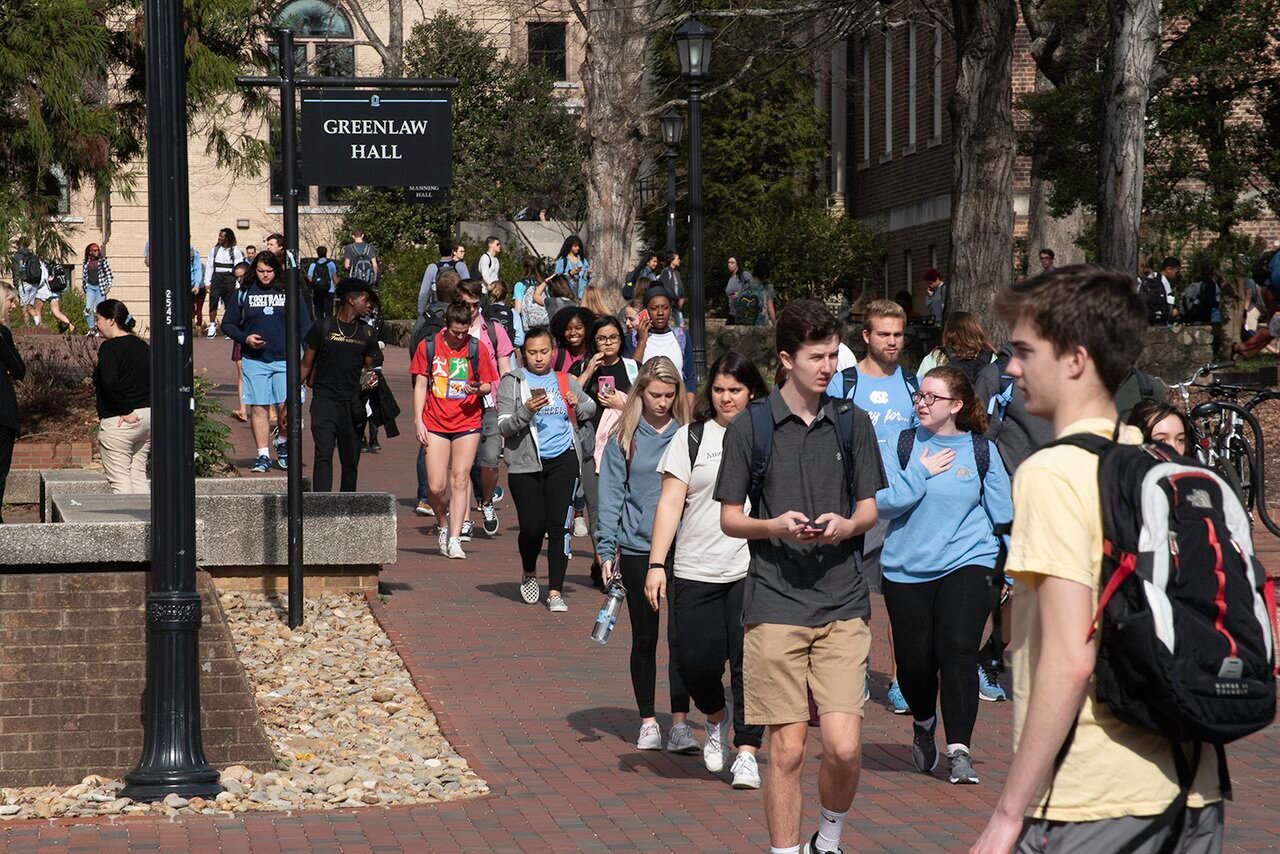
Image: Students walking through the University of North Carolina at Chapel Hill campus, photographed by Dennis Ludlow/Sharkshock. Licensed under CC BY-SA 4.0 via Wikimedia Commons. Archive photograph from 2019; used as an illustration and not a photograph of the proposed rule or affected individuals.