
Japanese Traditional Clothing: Kimono, Yukata and Hakama
 by
Babylon Radio
Listen nowJapanese traditional clothing includes the kimono, the lightweight yukata, pleated hakama, haori jackets and casual jinbei. A yukata is a casual type of kimono, often worn at summer festivals or provided by a ryokan. Other kimono styles range from everyday clothing to formal dress. The occasion, fabric and accessories matter when choosing what to wear.
This guide explains the main types of Japanese traditional clothing, when each one is worn, what the key differences are, and what newcomers and expats need to know before participating in Japanese cultural events.
Moving to Japan Guide: Relocation and Essentials
Japanese Traditional Clothing: Understanding Wafuku
Before looking at individual garments, it helps to understand the broader category they belong to. The term wafuku is a general term used to refer to all traditional Japanese clothing. The two kanji symbols for the word, 和服, literally translate to “Japanese” and “clothing.” It became the all-encompassing term for traditional Japanese dress following the Meiji era, when Western-style clothing, known as yofuku, began to enter Japanese life.
Traditional Japanese garments are famous not just for their aesthetics but also for how well they represent the country’s long history. Each piece tells a story through vibrant colours, intricate designs, and meaningful motifs. In the past, Japanese people wore these clothes on a daily basis. After the Second World War, Western clothing became the more common option. Today, traditional Japanese attire is mostly reserved for cultural ceremonies and special events such as weddings, festivals, and live performances.
For newcomers, this context matters. You will not see most Japanese people wearing traditional clothing every day. But you will see it at festivals, ceremonies, cultural sites, and seasonal events, and being able to recognise and understand what you are seeing is a meaningful part of engaging with Japanese culture.
Japan Dev guide to traditional Japanese clothing
The Kimono: Japan’s Most Iconic Garment
A kimono is a T-shaped, wrap-front garment secured with an obi sash. Its history includes influences from the Asian mainland as well as centuries of development in Japan. Rather than treating every kimono as one formal outfit, consider its fabric, pattern, sleeves and accessories together.
Types of Kimono
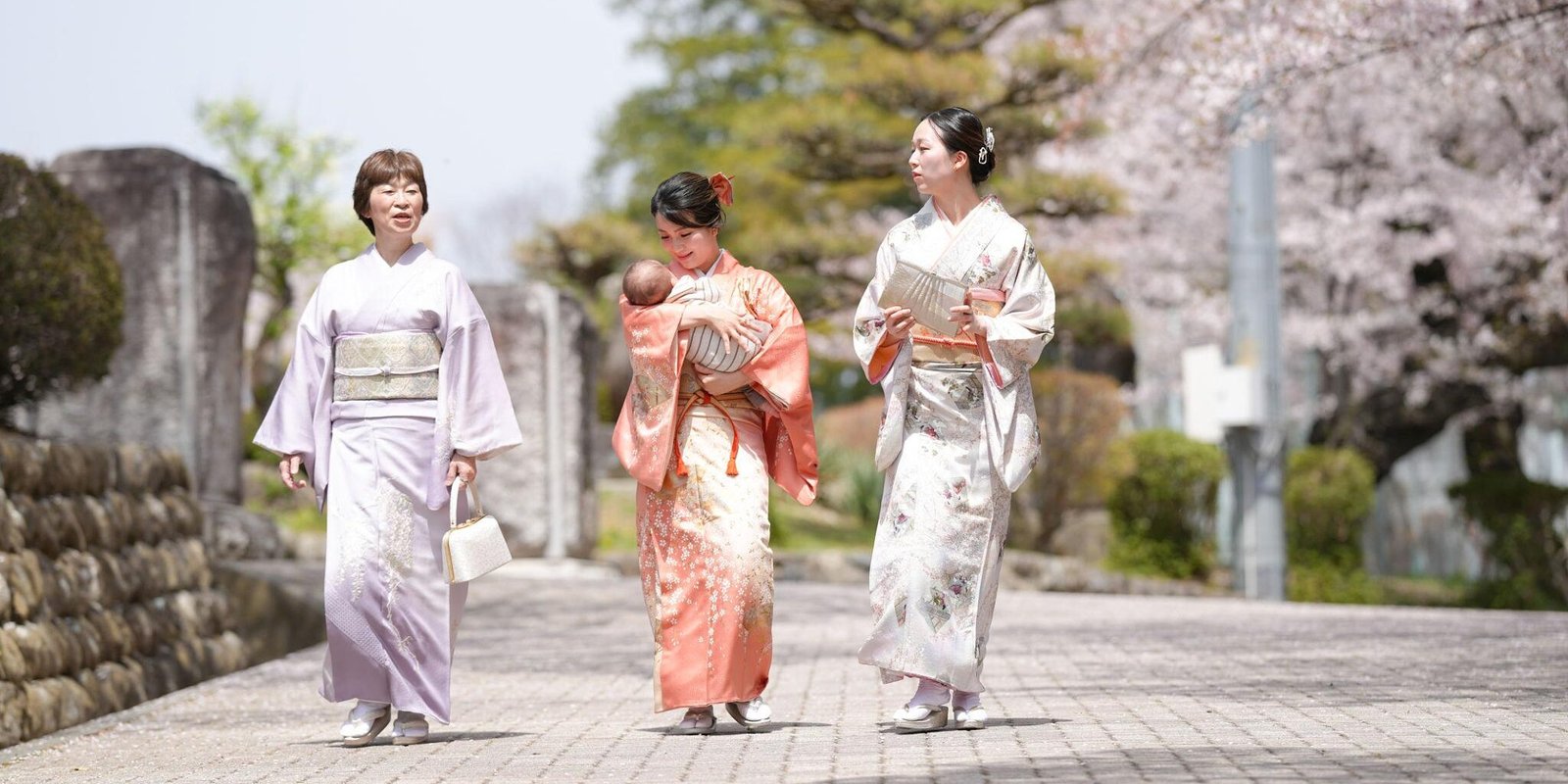
Kimono styles have conventions associated with different occasions. Long-sleeved furisode are commonly associated with young women at coming-of-age ceremonies, while other styles suit visits, weddings or everyday wear. These conventions are useful context, but clothing alone should not be used to infer a person’s marital status or social standing.
Kimonos can be worn for everything from everyday outings to the most formal occasions, depending on their tailoring, fabric, colours, and patterns. Key types include the furisode, a formal kimono with long flowing sleeves worn by unmarried women at ceremonies such as Coming of Age Day, the tomesode, a formal kimono for married women typically worn at weddings, and the houmongi, a semi-formal visiting kimono suitable for a range of social occasions.
Formal men’s dress can combine a kimono with a crested haori jacket and hakama. Hakama are worn over the kimono, rather than underneath it. For a ceremony, ask the host or a professional dresser which combination is appropriate.
A full silk kimono is expensive, often costing hundreds or even thousands of dollars. For newcomers who want to experience wearing one without the cost, rental services are widely available at tourist areas, temples, and in cities like Kyoto and Tokyo.
Japan Holidays: Cultural Events, Festivals and Celebrations Guide
The Yukata: Japan’s Summer Garment
The yukata is the garment newcomers are most likely to wear themselves, particularly if they attend a summer festival or stay at a traditional Japanese inn.
The name yukata translates to bathing cloth, which reflects its origins. Similar to a bathrobe or dressing gown in the West, yukatas were originally worn by bathers moving from one hot tub to the next. These days the yukata has evolved into a summer garment owned by fashion-conscious Japanese people of all ages.
A yukata is typically made from breathable materials such as cotton and consists of a single layer without linings, designed to absorb moisture and keep the wearer comfortable in warm weather. The wide sleeves and T-shape allow ease of movement, making it ideal for casual outdoor events.
Yukata vs Kimono: The Key Differences
A yukata is a lightweight, informal type of kimono, usually made from cotton or another breathable fabric. It is associated with warm-weather festivals and ryokan stays. Kimono is the broader category: many styles are formal, but casual kimono also exist.
The obi belt styles differ too. Kimono typically use wider, more formal obi such as Nagoya obi or fukuro obi, while yukata are paired with narrower casual obi such as hanhaba obi or soft heko obi.
Yukatas are also much easier to put on than kimono. Many people manage it themselves just by following a tutorial video. Newer options include yukatas with a separate top and skirt, making them feel more like regular clothing and helping prevent the outfit from coming undone.
For newcomers attending a summer matsuri or festival, wearing a yukata is warmly welcomed and considered a genuine show of respect and interest in Japanese culture. Many venues in tourist areas offer rental and dressing services for a modest fee.
Japan Objects yukata vs kimono guide
The Hakama: Traditional Trousers with Deep Roots
The hakama is another important element of Japanese traditional clothing that newcomers often encounter at graduation ceremonies, martial arts events, and shrine visits.
The hakama is a traditional wide-legged pleated trouser that originates from samurai clothing. It is typically worn over a kimono and serves both aesthetic and functional purposes. There are hakama for a wide array of activities, from martial arts practice to formal occasions that pair with kimono. Their style, cut, and wearing method vary depending on the gender they are designed for. They are traditionally made of silk or cotton, with darker colours for formal occasions and lighter shades for more casual wear.
In contemporary Japan, hakama are most commonly seen at university graduation ceremonies, where female students typically wear a furisode kimono with hakama and boots, and at Shinto shrines, where shrine maidens known as miko wear a distinctive red hakama as part of their uniform.
The Haori: Japan’s Traditional Jacket
The haori is a hip-length jacket worn over a kimono. Traditionally a formal outer garment worn by men, the haori has become far more fluid in terms of gender and occasion in modern Japan. It is increasingly seen incorporated into contemporary streetwear alongside Western clothing.
A haori can be worn as an outer layer over a kimono. Contemporary styling also pairs it with Western clothing. If you are dressing for a formal event, get advice on the whole outfit rather than choosing a jacket in isolation.
The Jinbei: Casual Summer Wear for Everyone
The jinbei is a two-piece casual garment consisting of a short-sleeved top and loose shorts, traditionally worn by men and boys during the summer months. It is lighter and more casual than the yukata and is typically worn at home, at local neighbourhood festivals, or during informal summer gatherings.
In recent years the jinbei has become popular across genders and age groups as a comfortable, easy-to-wear piece of Japanese traditional clothing that requires no special dressing knowledge. For newcomers in Japan during summer, it is one of the most practical and approachable traditional garments to own.
Accessories: The Details That Complete the Look
Japanese traditional clothing involves a range of accessories that are as culturally meaningful as the garments themselves.
The obi is the wide belt used to secure a kimono or yukata. Its style, width, and knotting method vary significantly depending on the garment and the occasion. The way the obi is tied is one of the most visible signals of formality and care in traditional Japanese dress.
Geta are traditional wooden sandals worn with yukata, while zori are flatter, more formal sandals typically worn with kimono. Tabi are white split-toe socks worn with zori and required for most formal kimono occasions.
Furoshiki are wrapping cloths that can be folded and tied to carry objects; they are not a particular type of ready-made bag. An obi, footwear and other accessories should suit the outfit and setting. Rental staff can explain the combinations they provide.
JeePe guide to kimono and yukata history and care
Learn Japanese in Japan: Courses, Schools and Classes Guide
When You Will Encounter Japanese Traditional Clothing as a Newcomer
Understanding when traditional clothing appears in Japanese life helps newcomers know what to expect and how to participate appropriately.
Summer festivals, known as matsuri, are the most common occasion to see and wear yukata. They run from late June through August across Japan and are one of the most accessible entry points into traditional Japanese culture for newcomers.
Coming of Age Day, held in January, sees young Japanese people dressed in furisode kimono and hakama across the country. Graduation ceremonies in March feature similar formal dress, particularly at universities.
Weddings in Japan often involve elaborate traditional dress for both the couple and some guests. Shichi-Go-San, a November celebration for children aged three, five, and seven, is another occasion where traditional clothing appears prominently in daily life.
Many ryokan provide a yukata for guests. Ask the accommodation where it may be worn, as arrangements differ between inns and hot-spring towns.
Japan Holidays: Cultural Events, Festivals and Celebrations Guide
Can Foreigners Wear Japanese Traditional Clothing?
This is one of the most common questions newcomers and visitors ask, and the answer is straightforwardly yes.
Wearing Japanese traditional clothing as a foreigner is not only acceptable but genuinely welcomed in most contexts. Traditional Japanese clothing heavily influences modern fusion styles, and this respect for tradition while embracing new interpretations is celebrated rather than guarded.
The key is approach. Wearing a yukata to a summer festival, renting a kimono for a temple visit in Kyoto, or dressing in traditional clothing for a cultural event are all considered sincere gestures of respect and interest. Treat the garments and the experience with care, follow the guidance of whoever is helping you dress, and engage with genuine curiosity rather than treating it as a costume.
Where it becomes more nuanced is at formal or sacred occasions where specific garments carry specific cultural weight. In those settings, follow the lead of your Japanese hosts and ask for guidance rather than assuming.
Japan Mental Health Support: Services, Therapists and Clinics
Key Takeaways
Japanese traditional clothing is a living, practised part of Japanese culture that newcomers will encounter regularly throughout the year. Understanding the difference between a kimono and a yukata, knowing when each is worn, and appreciating the cultural significance of these garments enhances every interaction with Japanese life.
- Wafuku is the umbrella term for all traditional Japanese clothing, covering everything from the formal kimono to the casual yukata and jinbei.
- Kimono styles range from casual to formal; choose a garment and accessories that suit the occasion.
- The yukata is a lighter, casual summer garment worn at festivals and ryokan stays. It is the most accessible traditional garment for newcomers to wear themselves.
- The hakama, haori, and jinbei are equally important parts of traditional Japanese dress, each with specific occasions and meanings.
- Foreigners wearing Japanese traditional clothing is welcomed when done with genuine respect and cultural awareness.
Questions about wearing Japanese clothing
What is the difference between a kimono and a yukata? A yukata is a lightweight, casual type of kimono. Other kimono styles may use different fabrics, underlayers and accessories, with both everyday and formal options available.
Q: Can foreigners wear a kimono or yukata in Japan? Yes, and it is genuinely welcomed. Wearing a yukata at a summer festival or renting a kimono for a cultural visit is considered a respectful gesture. Many tourist areas, temples, and cities offer rental and dressing services specifically for visitors who want to experience traditional Japanese clothing.
Q: How do you put on a yukata? A yukata is wrapped left side over right, secured at the waist with a koshi-himo cord, and then finished with an obi belt tied at the back. Many rental services include a dressing assistant who will help you wear it correctly. Tutorial videos are also widely available for those who want to try independently.
Q: What shoes are worn with traditional Japanese clothing? Geta, which are wooden sandals, are the traditional footwear for yukata. Zori, which are flatter sandals similar to flip-flops, are worn with more formal kimono. Tabi socks, which have a split toe, are worn with zori for formal occasions.
Q: When is the best time to experience Japanese traditional clothing as a newcomer? Summer is the easiest entry point, as yukata are widely worn at festivals and matsuri between June and August. Staying at a ryokan at any time of year also provides a natural opportunity to wear a yukata as part of the inn experience. Visiting Kyoto offers year-round kimono rental services and cultural experiences built around traditional dress.
Sources and practical guidance
For illustrated explanations and advice from people who wear kimono, see the Japan National Tourism Organization’s kimono and yukata guide and interview with Saki about kimono. Ask your rental service, ryokan or event host about the specific outfit and setting.